
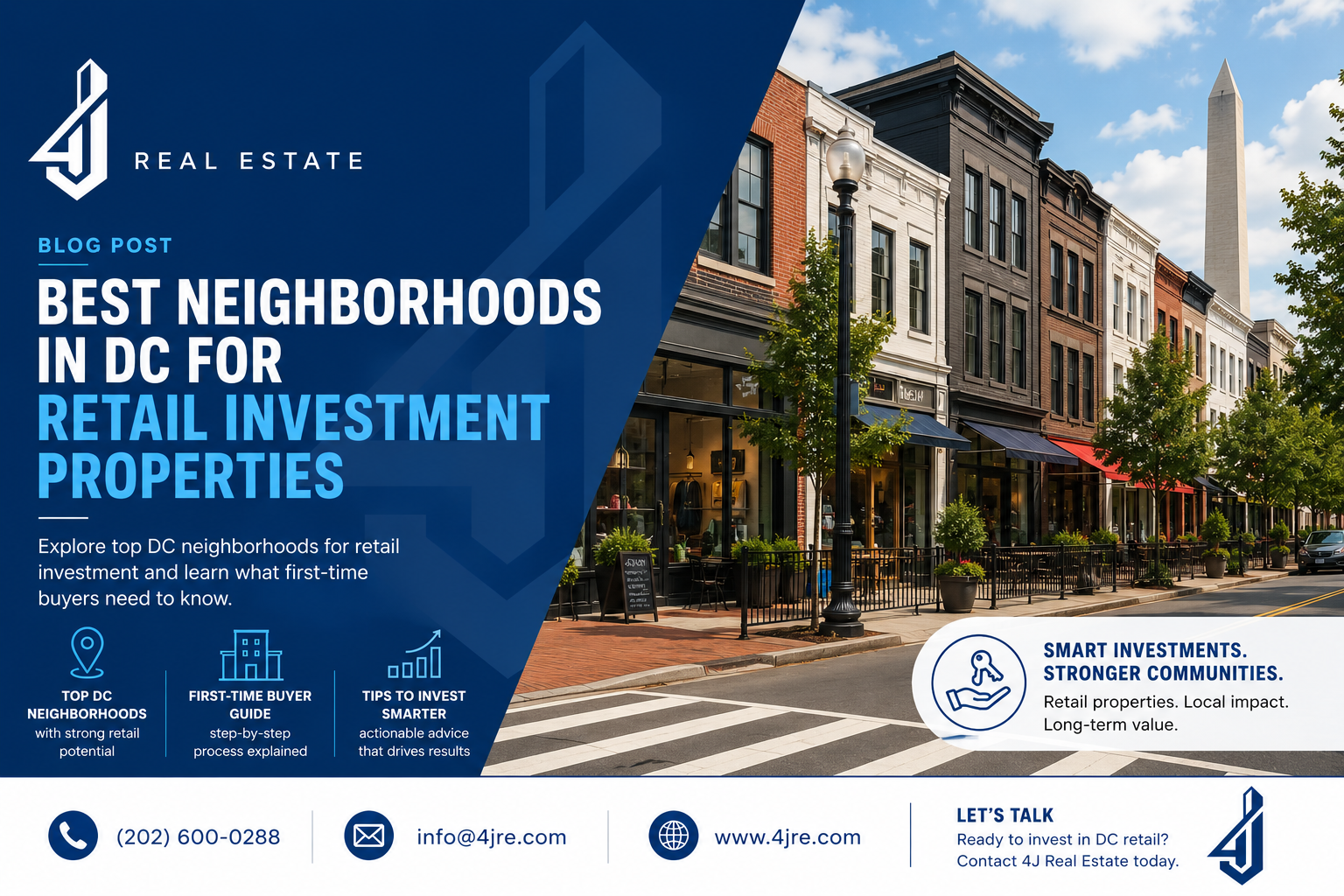
Best Neighborhoods in DC for Retail Investment Properties
Washington, DC, continues to attract investors looking for stable, long-term opportunities, and retail investment properties remain one of the city’s most appealing commercial real estate assets. From neighborhood shopping corridors to mixed-use developments with ground-floor retail, DC offers a wide range of investment opportunities for first-time and experienced buyers alike.
For investors exploring retail commercial real estate in Washington, DC, choosing the right neighborhood is one of the most important decisions you can make. Factors like walkability, foot traffic, residential density, local development, and tenant demand all influence the long-term value of a retail property.
If you are considering purchasing your first retail investment property in the DC area, here are some of the best neighborhoods to explore and what you should know before buying.
Why DC Remains Strong for Retail Investment
Washington, DC, offers a unique level of economic stability compared to many major metropolitan areas. The presence of government agencies, universities, tourism, and a growing residential population creates consistent consumer demand throughout the city.
Retail investment properties in DC can include:
-
Mixed-use buildings with retail storefronts
-
Standalone commercial spaces
-
Neighborhood shopping centers
-
Restaurants and café spaces
-
Boutique storefronts
-
Multi-tenant retail buildings
Many investors are drawn to retail properties because they can provide long-term lease income, appreciation potential, and portfolio diversification.
Georgetown: A Prime Retail Investment Neighborhood
One of the strongest retail investment neighborhoods in Washington, DC, is Georgetown. Known for its historic charm, luxury shopping, tourism, and high foot traffic, Georgetown remains one of the city’s most recognizable commercial districts.
M Street and Wisconsin Avenue continue to attract national brands, restaurants, and boutique retailers. The area benefits from:
-
Heavy pedestrian traffic
-
Strong tourism activity
-
High-income demographics
-
Established retail demand
-
Limited inventory availability
While pricing in Georgetown is often higher than in other neighborhoods, many investors see it as a long-term, stable retail market with strong appreciation potential.
For first-time investors, Georgetown may feel competitive, but smaller mixed-use properties or retail condos can provide a more accessible entry point into the market.
Other DC Neighborhoods Worth Watching
Shaw
Shaw has transformed significantly over the last decade and continues to attract new residents, restaurants, and retail tenants. With ongoing residential growth and strong nightlife activity, retail demand remains high.
Investors often target:
-
Restaurant spaces
-
Corner retail units
-
Mixed-use redevelopment opportunities
-
Service-based businesses
The neighborhood’s walkability and Metro accessibility make it appealing for both tenants and customers.
Capitol Hill
Capitol Hill offers a blend of residential stability and neighborhood retail demand. Areas surrounding Eastern Market and Pennsylvania Avenue continue to see consistent commercial activity.
This neighborhood is attractive for investors seeking:
-
Smaller retail storefronts
-
Long-term local business tenants
-
Stable rental income
-
Historic mixed-use properties
Retail spaces here often appeal to cafés, boutiques, wellness businesses, and neighborhood service providers.
Navy Yard
Navy Yard remains one of the fastest-growing areas in DC. With Nationals Park, new apartment developments, office growth, and increased foot traffic, retail demand has expanded rapidly.
Investors are increasingly exploring:
-
Ground-floor retail in mixed-use developments
-
Restaurant spaces
-
Fitness and entertainment concepts
-
Modern commercial condominiums
The area’s continued residential growth supports long-term retail demand.
Understanding the Retail Investment Buying Process
For first-time commercial buyers, retail real estate can initially feel overwhelming. However, understanding the process ahead of time can make investing more manageable and strategic.
Step 1: Define Your Investment Goals
Before searching for properties, determine your goals.
Ask yourself:
-
Are you looking for long-term cash flow?
-
Do you want appreciation potential?
-
Are you comfortable with renovations?
-
Do you prefer single-tenant or multi-tenant properties?
-
What is your investment timeline?
Having clear goals helps narrow your search and avoid properties that do not fit your strategy.
Step 2: Secure Financing
Commercial real estate financing differs from residential lending. Many retail investment loans require:
-
Larger down payments
-
Stronger cash reserves
-
Business financial documentation
-
Higher credit requirements
Working with a lender experienced in commercial real estate is essential. Some investors also explore SBA loans for owner-occupied retail properties.
Step 3: Analyze the Property Carefully
Unlike residential purchases, commercial retail investments require deeper financial analysis.
Buyers should review:
-
Existing lease agreements
-
Tenant history
-
Operating expenses
-
Property taxes
-
Maintenance costs
-
Vacancy rates
-
Foot traffic trends
-
Zoning regulations
Location and tenant quality often play a major role in a property’s long-term performance.
Step 4: Conduct Due Diligence
Before closing, buyers should complete inspections and financial reviews.
This may include:
-
Structural inspections
-
Environmental reviews
-
Title research
-
Lease audits
-
Market rent analysis
Commercial due diligence helps reduce surprises after purchase.
Step 5: Property Management and Operations
Once purchased, retail properties require ongoing management.
Investors may choose to:
-
Self-manage the property
-
Hire a professional property management company
-
Outsource maintenance and leasing
Professional management can help investors handle tenant communication, maintenance coordination, rent collection, lease renewals, and vendor management.
3 Actionable Tips for First-Time Retail Investors
1. Focus on Walkability and Visibility
Retail success often depends on customer exposure. Prioritize properties with strong street visibility, pedestrian traffic, parking access, and nearby residential density.
A beautiful property in a low-traffic location may struggle to attract quality tenants.
2. Study Tenant Mix in the Area
Pay attention to surrounding businesses. Strong retail corridors often feature complementary businesses that create consistent customer activity.
For example, cafés, fitness studios, salons, and restaurants frequently benefit from nearby residential growth and office traffic.
3. Budget Beyond the Purchase Price
Many first-time investors underestimate operational expenses. Be prepared for:
-
Tenant improvements
-
Maintenance costs
-
Vacancy periods
-
Insurance increases
-
Property management fees
-
Capital improvements
Building healthy cash reserves can help protect your investment during slower leasing periods.
Is Now a Good Time to Buy Retail Investment Property in DC?
While interest rates and economic conditions continue to evolve, many investors still see Washington, DC, as a strong long-term commercial real estate market. Population growth, ongoing redevelopment, and demand for neighborhood retail continue to support investment activity across the city.
The key is identifying neighborhoods with sustainable growth, stable tenant demand, and long-term redevelopment potential.
For first-time buyers, partnering with a knowledgeable commercial real estate team can help simplify the process and reduce costly mistakes.
Work With 4J Real Estate
Whether you are exploring your first retail investment property or expanding your commercial portfolio, 4J Real Estate can help you navigate the DC commercial real estate market with confidence.
Our team understands the Washington, DC, Maryland, and Northern Virginia markets and can help you identify investment opportunities that align with your goals.
Contact 4J Real Estate today at (202) 600-0288 or visit our website to learn more about commercial and investment property opportunities.
Posted by Justin Paulhamus on
Enjoy this blog post? Click here to subscribe for updates
Leave A Comment