
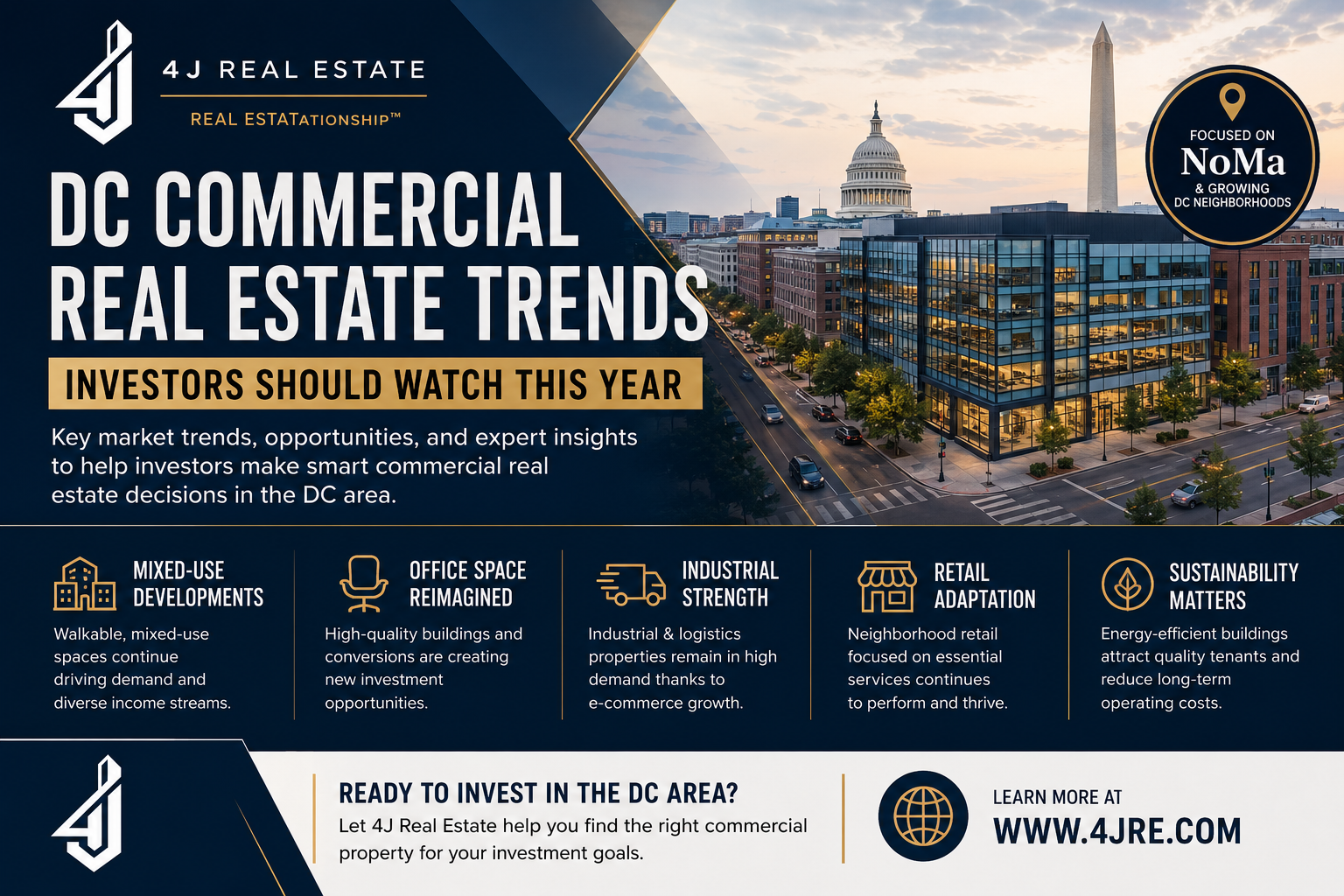
DC Commercial Real Estate Trends Investors Should Watch This Year
Commercial real estate in the Washington, DC region continues to evolve, creating new opportunities for both experienced investors and first-time buyers. While residential real estate often gets the headlines, commercial properties—from office buildings and retail spaces to mixed-use developments and small multifamily buildings—can offer strong long-term income and appreciation when purchased strategically.
If you're considering investing in commercial real estate in Washington, DC, Maryland, or Northern Virginia, understanding today's market trends can help you make a smarter investment. Whether you're purchasing your first commercial property or expanding your portfolio, staying informed is one of your biggest advantages.
Why the DC Commercial Market Remains Attractive
Washington, DC has long been considered one of the country's most stable commercial real estate markets. Thanks to the federal government, universities, healthcare systems, technology companies, and nonprofit organizations, the region enjoys a diverse economic foundation that helps support long-term demand for commercial space.
Neighborhoods like NoMa continue attracting businesses, residents, and developers through ongoing redevelopment projects, making them attractive areas for investors seeking future growth.
Although higher interest rates have changed the pace of acquisitions, they've also created opportunities for buyers willing to negotiate and focus on long-term value instead of short-term gains.
Trend #1: Mixed-Use Developments Continue Growing
One of the biggest commercial real estate trends this year is the continued popularity of mixed-use developments.
These properties combine retail, office, residential, and entertainment spaces into one location. Consumers increasingly prefer walkable neighborhoods where they can live, work, dine, and shop without driving across town.
For investors, mixed-use properties often provide diversified income streams. If one tenant category slows down, another may continue producing steady revenue.
Areas throughout Washington, DC, including NoMa and portions of Capitol Riverfront, continue seeing investment in mixed-use projects that appeal to both businesses and residents.
Trend #2: Office Space Is Being Reimagined
The office market continues adjusting after the rise of hybrid work.
Rather than disappearing, office demand is shifting toward higher-quality, amenity-rich buildings located near Metro stations and restaurants. Older office buildings are increasingly being converted into apartments, hotels, or mixed-use developments.
For investors, this creates opportunities to purchase underperforming properties that may have redevelopment potential or benefit from neighborhood revitalization efforts.
Understanding zoning regulations and redevelopment possibilities becomes especially important when evaluating these investments.
Trend #3: Industrial and Logistics Properties Stay Strong
E-commerce continues fueling demand for warehouse and distribution facilities across the DC metropolitan area.
Northern Virginia and parts of Maryland remain attractive locations for logistics companies because of their proximity to major highways, airports, and population centers.
Industrial properties often require less day-to-day management than some retail or office investments while offering long-term lease stability with established tenants.
Trend #4: Neighborhood Retail Is Adapting
Retail isn't disappearing—it's evolving.
Instead of relying heavily on large department stores, many retail centers now focus on restaurants, fitness studios, healthcare providers, salons, specialty grocery stores, and local service businesses.
Properties anchored by businesses that provide everyday services often remain resilient during changing economic conditions.
Investors should pay close attention to tenant quality, lease terms, and surrounding residential growth when evaluating retail opportunities.
Trend #5: Sustainability Matters More Than Ever
Energy-efficient commercial buildings continue attracting tenants seeking lower operating costs and environmentally responsible workplaces.
Features such as updated HVAC systems, LED lighting, solar panels, EV charging stations, and sustainable building certifications can improve both occupancy rates and long-term property values.
As operating expenses continue rising, efficient buildings may become increasingly competitive within the marketplace.
How First-Time Commercial Buyers Can Get Started
Purchasing commercial real estate differs significantly from buying a home.
Instead of focusing solely on appearance or location, commercial buyers must evaluate financial performance, future income potential, operating expenses, and lease agreements.
Here's a simplified process:
1. Define your investment goals.
Determine whether you're seeking rental income, appreciation, owner-occupied space, or redevelopment opportunities.
2. Secure financing early.
Commercial loans typically require larger down payments and different underwriting standards than residential mortgages. Meeting with a lender before shopping helps establish a realistic budget.
3. Work with an experienced commercial real estate professional.
An agent familiar with the local market can identify opportunities, explain zoning issues, negotiate contracts, and coordinate inspections and due diligence.
4. Perform thorough due diligence.
Review leases, financial statements, maintenance history, environmental reports, occupancy levels, and projected expenses before closing.
5. Close with confidence.
Once financing, inspections, and negotiations are complete, you'll move through closing and officially become the property's owner.
Three Actionable Tips for Commercial Investors
1. Study the Neighborhood, Not Just the Building
Look beyond the property itself. Research population growth, planned infrastructure improvements, new businesses, and nearby development projects. A growing neighborhood often supports stronger long-term appreciation.
2. Analyze the Numbers Carefully
Don't rely solely on asking price. Review net operating income (NOI), capitalization rate (cap rate), vacancy history, maintenance costs, and lease expiration dates before making an offer.
3. Build the Right Team
Commercial transactions often involve attorneys, lenders, inspectors, accountants, contractors, and experienced real estate professionals. Having knowledgeable experts on your side can help you avoid costly mistakes and uncover opportunities you might otherwise miss.
Looking Ahead
While commercial real estate continues evolving throughout Washington, DC, Maryland, and Northern Virginia, opportunities remain for investors who understand local trends and approach each purchase strategically.
Markets shift, tenant demands change, and financing conditions fluctuate, but well-located commercial properties continue serving as valuable long-term investments. With proper research, realistic expectations, and expert guidance, first-time commercial buyers can confidently enter the market and build lasting wealth.
Whether you're considering a retail storefront, office building, mixed-use development, or investment property, having an experienced local real estate partner can make all the difference.
Ready to explore commercial investment opportunities in the Washington, DC region? Contact 4J Real Estate today at www.4jre.com to discuss your goals and discover commercial properties that align with your investment strategy.
Posted by Justin Paulhamus on
Enjoy this blog post? Click here to subscribe for updates
Leave A Comment