
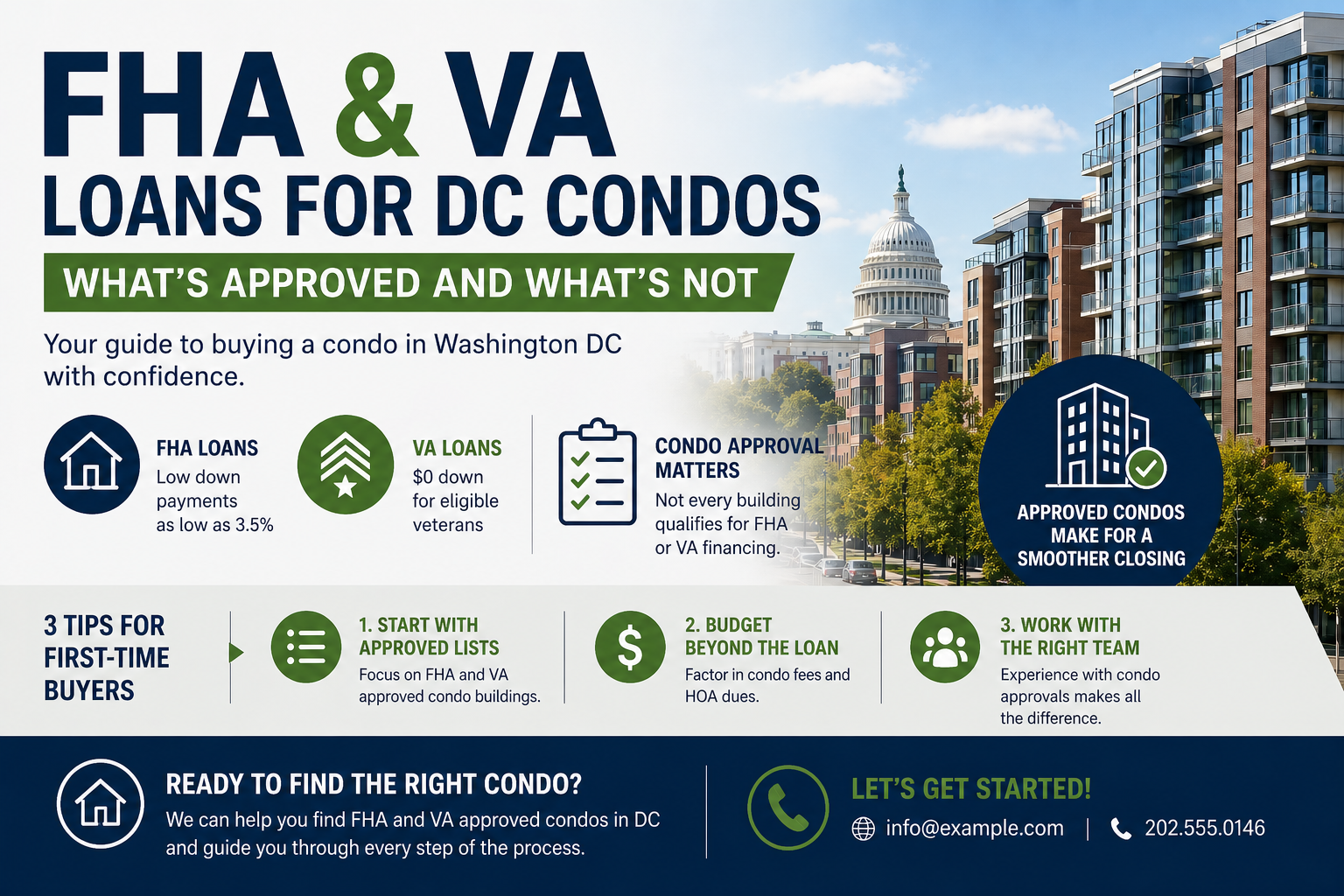
FHA and VA Loans for DC Condos: What’s Approved and What’s Not
If you’re a first-time buyer eyeing a condo in Washington DC—especially in popular neighborhoods like Capitol Hill—you’ve probably come across two attractive financing options: FHA and VA loans. Both offer low (or no) down payment options and flexible credit requirements, making them especially appealing in a high-cost market like DC.
But here’s where many buyers get tripped up: not every condo qualifies for FHA or VA financing. Understanding what’s approved—and what’s not—can save you time, frustration, and even a lost deal.
Let’s break it down.
Why FHA and VA Loans Are So Popular for DC Condo Buyers
FHA (Federal Housing Administration) loans are designed to help buyers with lower credit scores or smaller down payments—sometimes as low as 3.5%. VA (Veterans Affairs) loans, on the other hand, are available to eligible military service members and veterans, often requiring zero down payment and no private mortgage insurance (PMI).
In a competitive and expensive market like DC, these benefits can be game-changing. However, condos must meet specific standards before they can be financed with these loan types.
The Key Difference: Condo Approval Status
Unlike single-family homes, condos must be approved at the building level, not just the individual unit.
There are two main ways a condo can qualify:
1. FHA or VA Approved Condo Buildings
Some condo buildings are already certified by the FHA or VA. This means the entire building has been reviewed and meets their guidelines.
These approvals consider:
-
Financial stability of the condo association
-
Owner-occupancy ratios
-
Insurance coverage
-
Reserve funds
-
Delinquency rates on condo dues
If a building is approved, buying with FHA or VA financing becomes much smoother.
2. Spot Approval (Limited and Situational)
If a condo building isn’t fully approved, buyers may still have an option through spot approval (more common with FHA than VA).
However, this process is:
-
More complex
-
Time-sensitive
-
Not guaranteed
Lenders will review the building’s documents during the transaction, which can delay closing—or derail the deal entirely if issues arise.
What Typically Gets a Condo Denied?
Understanding what doesn’t qualify is just as important as knowing what does.
Here are common reasons a condo may not be FHA or VA approved:
Low Owner-Occupancy Rates
If too many units are rented out, lenders see the building as higher risk.
High Delinquency Rates
If a significant number of owners are behind on condo fees, it raises concerns about financial stability.
Insufficient Reserves
Condo associations need to maintain adequate reserve funds for maintenance and repairs.
Pending Litigation
Ongoing lawsuits involving the condo association can be a red flag.
Commercial Space Overload
If a large portion of the building is used for commercial purposes (retail, offices), it may not qualify.
The Buying Process: Step-by-Step for FHA & VA Condo Buyers
If you’re planning to use an FHA or VA loan in DC, here’s how the process typically unfolds:
Step 1: Get Pre-Approved
Start with a lender experienced in FHA or VA loans. They’ll confirm your eligibility and purchasing power.
Step 2: Target Approved Condos First
Work with a knowledgeable real estate agent who can identify FHA or VA-approved buildings early in your search.
Step 3: Verify Approval Status
Even if a listing claims eligibility, your lender should verify it through official databases or documentation.
Step 4: Make a Competitive Offer
In competitive neighborhoods like Capitol Hill, having a clear financing plan helps your offer stand out.
Step 5: Condo Review & Underwriting
Your lender will review the condo association documents to ensure compliance (especially if using spot approval).
Step 6: Close the Deal
If everything checks out, you move to closing—often with lower upfront costs than conventional financing.
3 Actionable Tips for First-Time Buyers
1. Start With Approved Condo Lists
Ask your agent or lender for a list of FHA and VA-approved condo buildings in DC. This narrows your search and reduces risk immediately.
2. Budget Beyond the Mortgage
Even with low down payment loans, condo fees can significantly impact your monthly payment. Always factor in HOA/condo fees when determining affordability.
3. Work With the Right Team
Not all agents and lenders understand the nuances of condo approvals. Choose professionals experienced in DC condo transactions and government-backed loans.
Why This Matters in a Market Like DC
Washington DC’s condo market is fast-moving and highly competitive. If you fall in love with a unit that isn’t eligible for your loan type, you may have to walk away—or pivot financing strategies quickly.
That’s why preparation is everything.
By focusing on approved buildings and understanding the guidelines upfront, you position yourself to act confidently and avoid costly surprises.
Final Thoughts
FHA and VA loans can open the door to homeownership in Washington DC—especially for first-time buyers—but condo eligibility adds an extra layer of complexity.
The key is knowing what’s approved, what’s not, and how to navigate the process strategically.
Posted by Justin Paulhamus on
Enjoy this blog post? Click here to subscribe for updates
Leave A Comment