
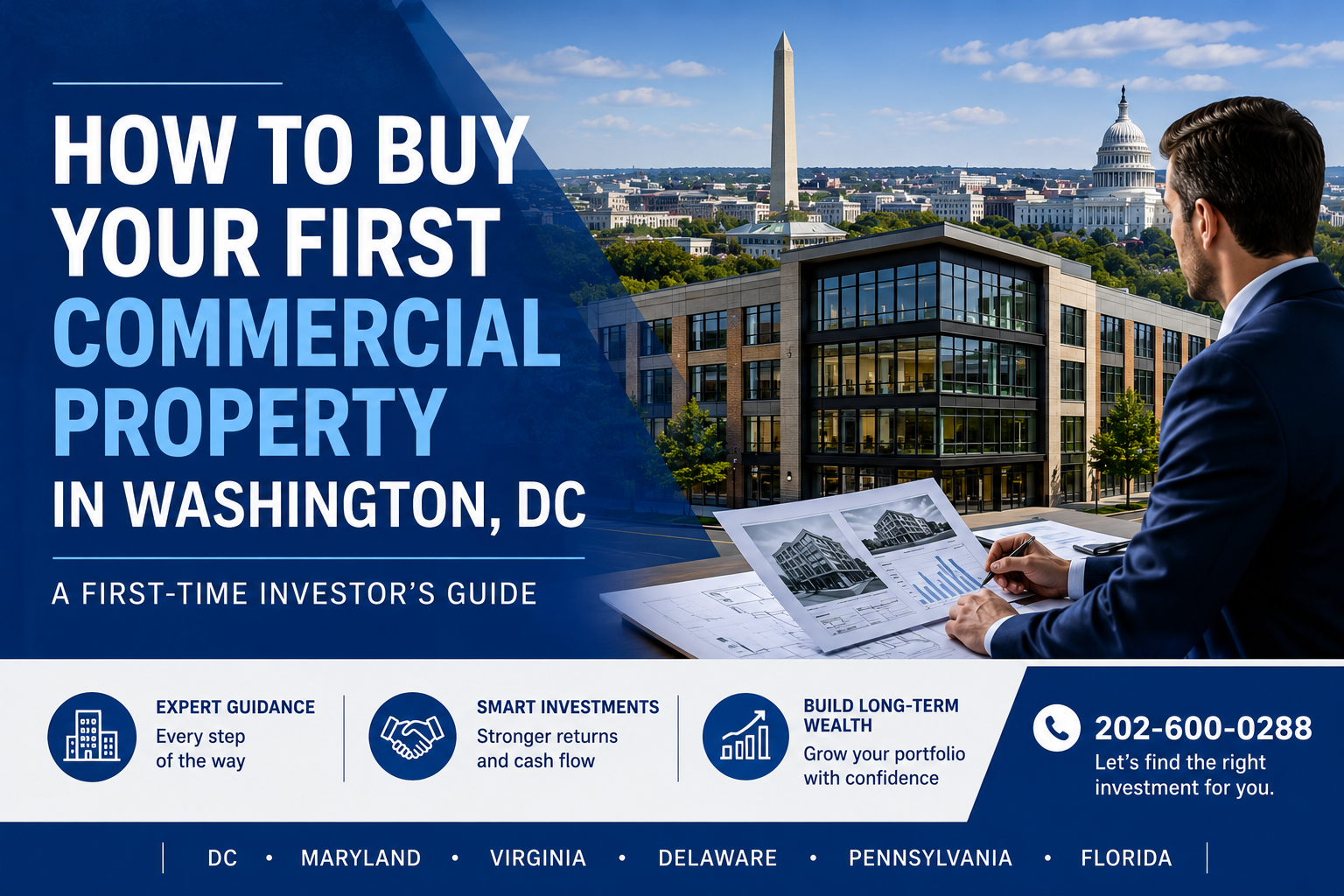
How to Buy Your First Commercial Property in Washington, DC
Purchasing your first commercial property in Washington, DC can be one of the most rewarding investments you make. Whether you're looking to buy an office building, retail space, mixed-use property, or multifamily asset, commercial real estate offers opportunities for long-term income, appreciation, and business growth.
However, buying commercial property differs significantly from purchasing a residential home. Understanding the process before you begin can help you avoid costly mistakes and make confident decisions.
If you're considering entering the Washington, DC commercial real estate market, here's what you need to know.
Why Invest in Commercial Property in Washington, DC?
Washington, DC remains one of the country's most stable real estate markets due to its strong government presence, diverse economy, growing population, and consistent demand for office, retail, and multifamily properties.
Neighborhoods such as Capitol Hill continue to attract investors because of their mix of commercial activity, residential demand, and long-term value growth. Whether you're an investor seeking passive income or a business owner looking for a permanent location, commercial property can provide significant financial benefits.
Step 1: Define Your Investment Goals
Before searching for properties, determine exactly what you want to accomplish.
Ask yourself:
-
Are you purchasing for rental income?
-
Do you plan to occupy the property for your business?
-
Are you seeking long-term appreciation?
-
Do you want a property that requires active management or a passive investment?
Your goals will help determine the type of commercial property that best fits your needs.
Common commercial property types include:
-
Office Buildings
-
Retail Properties
-
Mixed-Use Developments
-
Multifamily Buildings
-
Industrial Properties
Each asset class comes with different risks, financing requirements, and income potential.
Step 2: Understand Your Budget and Financing Options
Commercial financing is very different from residential lending.
Most lenders require:
-
Larger down payments (typically 20%–35%)
-
Strong credit history
-
Business financial statements (if owner-occupied)
-
Proof of income and reserves
Many first-time buyers are surprised by the additional costs involved, including:
-
Appraisals
-
Environmental assessments
-
Property inspections
-
Legal fees
-
Loan origination costs
Meeting with a commercial lender early in the process can help establish a realistic budget and strengthen your negotiating position.
Step 3: Build Your Commercial Real Estate Team
Successful commercial purchases often involve several professionals working together.
Your team may include:
-
Commercial real estate agent
-
Commercial lender
-
Real estate attorney
-
CPA or financial advisor
-
Property inspector
-
Title company
Having experienced professionals on your side helps identify risks, negotiate favorable terms, and ensure the transaction proceeds smoothly.
Step 4: Search for the Right Property
Once financing is in place, it's time to identify properties that align with your goals.
When evaluating commercial properties, consider:
Location
Location remains one of the most important factors in commercial real estate.
Look at:
-
Traffic patterns
-
Public transportation access
-
Population growth
-
Business activity
-
Future development plans
Areas such as Capitol Hill often appeal to both tenants and investors due to their accessibility and strong demand.
Income Potential
Review:
-
Existing lease agreements
-
Rent rolls
-
Vacancy rates
-
Operating expenses
Understanding current and projected cash flow is critical before making an offer.
Property Condition
A thorough inspection can uncover costly issues involving:
-
Roof systems
-
HVAC equipment
-
Structural components
-
Plumbing and electrical systems
Unexpected repairs can significantly affect your return on investment.
Step 5: Conduct Due Diligence
Due diligence is one of the most important phases of a commercial transaction.
During this period, buyers typically review:
-
Financial records
-
Property tax history
-
Lease agreements
-
Environmental reports
-
Zoning regulations
-
Building permits
This investigation helps ensure there are no hidden liabilities that could impact the property's value or future use.
Step 6: Negotiate and Close
After completing due diligence, you'll finalize financing and negotiate the remaining terms.
Key negotiation points may include:
-
Purchase price
-
Repair credits
-
Closing timeline
-
Contingencies
-
Tenant-related issues
Once all requirements are satisfied, the transaction proceeds to closing, and ownership transfers to the buyer.
Three Actionable Tips for First-Time Commercial Buyers
1. Start With a Smaller Property
Many successful investors begin with smaller mixed-use or multifamily properties before moving into larger commercial assets. This allows you to gain experience while managing risk.
2. Analyze Cash Flow Carefully
Never rely solely on future appreciation. Review current income, expenses, vacancies, and maintenance costs to understand the property's actual performance.
3. Work With Commercial Specialists
Commercial real estate is highly specialized. Partnering with experienced professionals can help you identify opportunities and avoid costly mistakes.
Final Thoughts
Buying your first commercial property in Washington, DC can be a powerful step toward building long-term wealth and creating new income opportunities. By understanding financing, conducting thorough due diligence, and working with knowledgeable professionals, first-time buyers can navigate the process with confidence.
Whether you're interested in office space, retail property, mixed-use buildings, or investment real estate, the right strategy can help you achieve your financial goals.
Posted by Justin Paulhamus on
Enjoy this blog post? Click here to subscribe for updates
Leave A Comment