
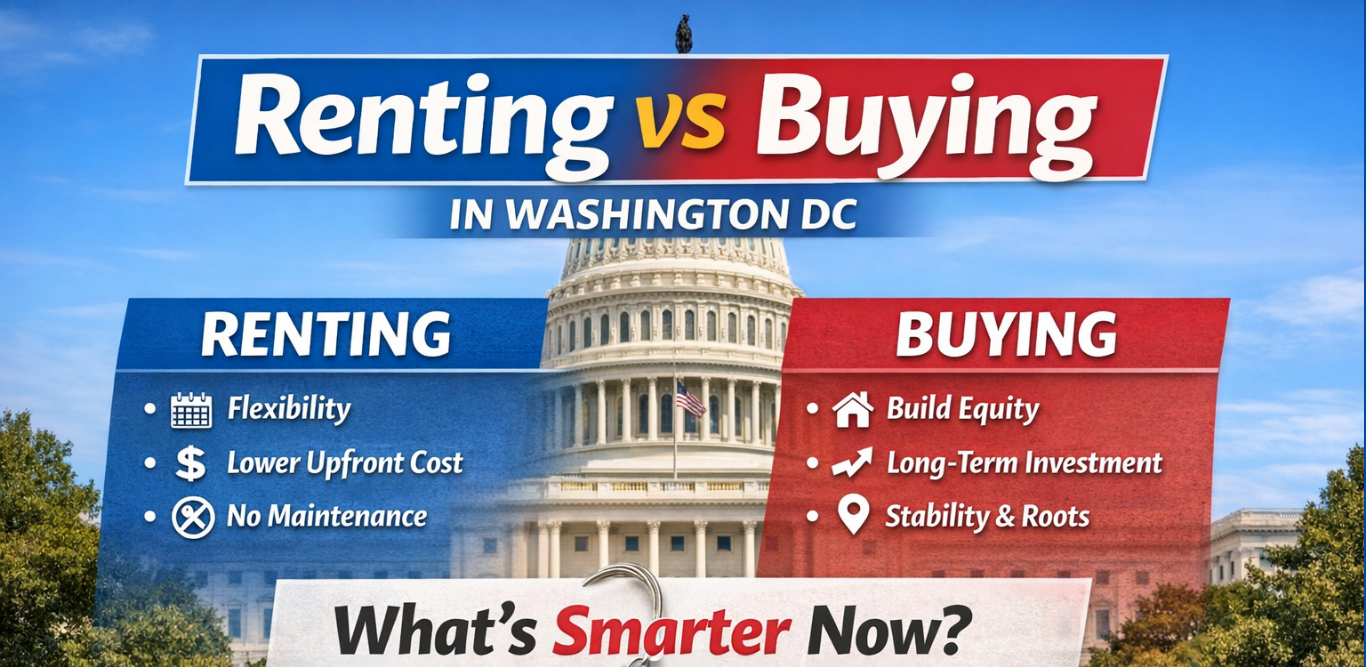
Is Renting or Buying Smarter in Washington DC Right Now?
If you’re living in Washington DC and watching rents climb year after year, you’ve probably asked yourself: Is it finally time to buy? Or does renting still make more sense in today’s market?
The answer isn’t one-size-fits-all. It depends on your finances, timeline, and goals. But in 2026, with steady demand, limited inventory, and strong long-term appreciation in neighborhoods like Capitol Hill, many renters are taking a closer look at homeownership.
Let’s break down what DC buyers should consider — and how to decide what’s smarter for you right now.
The DC Rental Market: Predictable but Rising
Washington DC has always had a strong rental market. Between government employees, contractors, students, and young professionals, demand rarely slows down.
In popular areas like Capitol Hill, Navy Yard, and Shaw, rents for one-bedroom apartments can easily compete with a monthly mortgage payment — especially when you factor in parking, pet fees, and annual increases.
Renting offers:
-
Flexibility to move
-
Lower upfront costs
-
No responsibility for repairs
-
Easier short-term living
But renting also means:
-
No equity building
-
Rent increases year after year
-
No control over long-term housing costs
If you plan to stay in DC for just 1–2 years, renting may still make sense. But if you’re planning to stay longer, buying starts to look more strategic.
The DC Buying Market: Higher Entry, Long-Term Advantage
Buying in Washington DC requires more upfront investment. You’ll need:
-
A down payment (often 3%–20%)
-
Closing costs (typically 2%–3% of the purchase price)
-
Emergency savings
However, once you buy, your housing payment becomes more predictable (especially with a fixed-rate mortgage). Instead of paying a landlord, you’re building equity in a market that historically holds strong long-term value.
In neighborhoods like Capitol Hill, buyers benefit from:
-
Walkability
-
Strong resale demand
-
Proximity to Metro
-
Long-term appreciation potential
Even with current interest rates higher than a few years ago, many buyers are negotiating closing cost credits or price adjustments — something renters can’t do.
When Buying Makes More Financial Sense
Buying in DC tends to make sense if:
-
You plan to stay at least 3–5 years
-
You have stable income
-
You can comfortably afford the monthly payment
-
You want long-term financial growth
Over time, appreciation and equity building can offset upfront costs. Plus, homeowners gain tax advantages and the ability to refinance if rates drop in the future.
Renters, on the other hand, don’t benefit when property values increase — but homeowners do.
What the Buying Process Looks Like for First-Time DC Buyers
If you’re currently renting and considering buying, here’s what the process typically looks like:
1. Get Pre-Approved
This is the first real step. A lender reviews your income, debt, credit, and assets to determine how much you can borrow. In DC’s competitive market, sellers expect a strong pre-approval before accepting offers.
2. Determine Your Budget Comfort Zone
Just because you’re approved for a certain number doesn’t mean you should spend it. Consider your lifestyle, savings goals, and future plans.
3. Tour Homes and Evaluate Value
In DC, location is everything. Two homes priced the same can have very different long-term value depending on proximity to Metro, neighborhood demand, and condition.
4. Make a Strategic Offer
Your agent will analyze comparable sales and help you structure an offer that’s competitive but smart. This might include contingencies, negotiation strategies, and potential seller credits.
5. Inspections, Appraisal, and Closing
Once under contract, you’ll complete inspections, the lender will order an appraisal, and you’ll finalize financing. Closing typically happens 30–45 days after contract acceptance.
The process can feel overwhelming at first, but with the right guidance, it becomes structured and manageable.
3 Actionable Tips to Decide If Buying Is Right for You
1. Compare Your Rent to a Real Mortgage Estimate
Don’t guess — get real numbers. Talk to a lender and see what your payment would look like with taxes, insurance, and HOA included. You may be surprised how close it is to your rent.
2. Evaluate Your Timeline Honestly
If you plan to stay in DC for at least 3–5 years, buying may provide stronger financial upside. If your career could move you soon, renting might be safer.
3. Check Your Financial Readiness (Beyond the Down Payment)
Make sure you have:
-
Emergency savings
-
Stable income
-
Manageable debt
-
Comfort with maintenance responsibility
Buying should feel sustainable — not stressful.
Emotional vs. Financial Factors
The rent vs. buy decision isn’t just math.
Buying offers:
-
Stability
-
Personalization
-
Community roots
-
Pride of ownership
Renting offers:
-
Flexibility
-
Simplicity
-
Lower commitment
If you value mobility and minimal responsibility, renting may still align better. If you’re ready to plant roots in DC — especially in stable neighborhoods like Capitol Hill — ownership may be the smarter long-term move.
So… Is Renting or Buying Smarter in DC Right Now?
For many Washington DC residents planning to stay long-term, buying is increasingly attractive. Inventory remains competitive, but negotiation opportunities exist. Rents continue rising, while mortgage payments (with fixed rates) offer stability.
The key isn’t trying to perfectly time the market — it’s making a decision aligned with your personal finances and future goals.
If you’re unsure, the best first step isn’t committing to buy — it’s having a strategy conversation.
Thinking About Making the Move?
Whether you’re renting in DC or considering your first purchase, having clear numbers and a plan makes all the difference.
If you’d like to explore what buying would look like for you in today’s Washington DC market, contact 4J Real Estate. We’ll help you compare options, understand the process, and make the smartest move for your future.
Posted by Justin Paulhamus on
Enjoy this blog post? Click here to subscribe for updates
Leave A Comment