
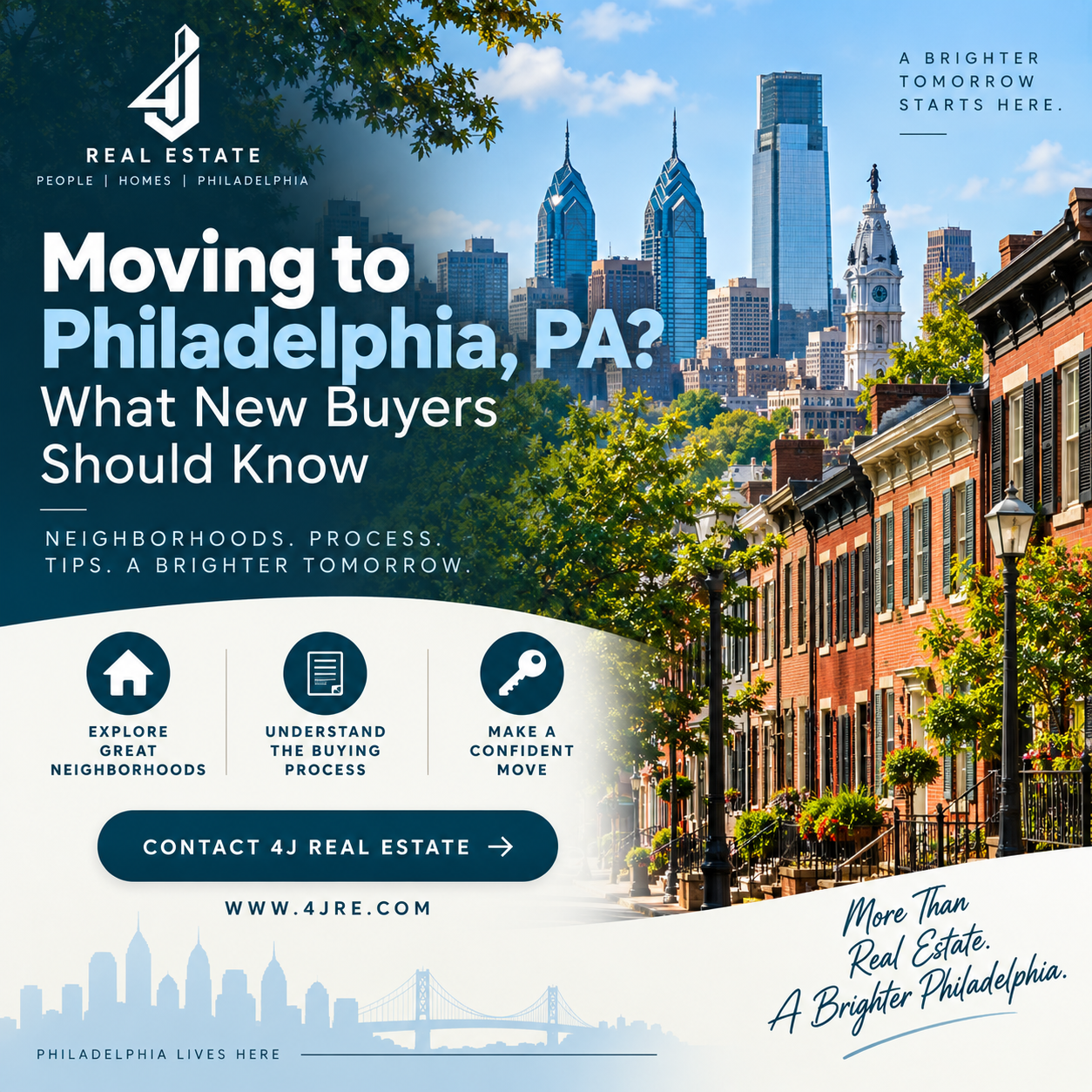
Moving to Philadelphia, PA? What New Buyers Should Know
Thinking about moving to Philadelphia, Pennsylvania? Whether you’re relocating for work, looking for more space, moving closer to family, or ready to purchase your first home, Philadelphia offers buyers something many major East Coast cities struggle to provide: a wide variety of neighborhoods, housing styles, and price points.
But buying a home in Philadelphia comes with a few local considerations that newcomers may not expect.
From historic rowhomes and new construction to property taxes and closing costs, understanding the Philadelphia real estate market before you begin your search can help you make a smarter, more confident purchase.
Here’s what new buyers should know before moving to Philadelphia.
Philadelphia Is a City of Neighborhoods
One of the first things newcomers discover is just how different Philadelphia can feel from one neighborhood to the next.
Take South Philadelphia, for example. Buyers can find classic Philadelphia rowhomes, renovated properties, new construction, restaurants, parks, and convenient access to Center City. But even within South Philadelphia, the housing stock, parking options, street layouts, and overall feel can change considerably from one area to another.
That makes neighborhood research especially important.
Before focusing exclusively on bedrooms, bathrooms, and finishes, think about your everyday lifestyle. How long will your commute be? Do you need dedicated parking? Is access to SEPTA important? Do you want to walk to restaurants and shops? Are you looking for a quieter residential block or something closer to the action?
Visiting prospective neighborhoods at different times of the day can give you a much better sense of what living there might actually be like.
Understand How Much Home You Can Comfortably Afford
If you’re a first-time buyer, your first step should generally happen before you start touring homes: talk to a mortgage lender and get pre-approved.
A lender will review factors such as your income, credit, debts, assets, and available down payment to determine how much you may qualify to borrow.
But remember: the amount you qualify for and the amount you can comfortably afford aren't necessarily the same.
Your housing budget should account for more than principal and interest. Depending on the property and your loan, your monthly costs could also include:
-
Property taxes
-
Homeowners insurance
-
Mortgage insurance
-
Condo or homeowners association fees
-
Utilities
-
Maintenance and repairs
Philadelphia's Real Estate Tax is based on the property's assessed value, so buyers should review the assessment and estimated taxes for any property they're seriously considering.
Budget for Philadelphia Closing Costs
This is an area where buyers relocating from another market can be caught off guard.
Philadelphia imposes a Realty Transfer Tax when real estate changes ownership. The current combined Philadelphia and Pennsylvania transfer tax rate is 4.578% of the sale price or assessed value, depending on the circumstances. Although the tax is commonly split between the buyer and seller, that split is not legally required and should be addressed as part of the transaction.
That means you shouldn't plan only for your down payment.
Before making an offer, ask your lender and real estate agent to help you estimate the total amount of cash you may need at closing, including your down payment, lender fees, title-related expenses, prepaid taxes and insurance, and your portion of applicable transfer taxes.
Having that estimate early can prevent an unpleasant surprise when you're approaching settlement.
Don't Overlook Philadelphia's Older Housing Stock
Philadelphia's historic character is part of its appeal, but an older home deserves careful due diligence.
That beautiful brick rowhome you've fallen in love with may have been standing for generations. Even when the kitchen and bathrooms look completely updated, important components behind the walls may be much older.
A professional home inspection can help identify potential concerns involving the roof, electrical system, plumbing, HVAC equipment, foundation, moisture, and other major components.
New construction deserves scrutiny, too. "New" doesn't automatically mean "perfect." Buyers should understand warranties, construction quality, taxes, and any condo or homeowners association obligations before closing.
Know About Philadelphia's Homestead Exemption
Once you become a Philadelphia homeowner and use the property as your primary residence, you may qualify for the City's Homestead Exemption.
The program currently reduces the taxable assessed value of an eligible primary residence by $100,000, which can save homeowners up to approximately $1,399 per year in Real Estate Tax.
That's a benefit worth knowing about, especially for first-time buyers establishing their long-term housing budget.
After purchasing your home, verify whether the property has the exemption and whether you need to apply. Don't assume that a benefit associated with the previous owner automatically applies to your situation.
The Basic Philadelphia Home-Buying Process
If you've never purchased a home before, the process may seem overwhelming. Breaking it into stages makes it much easier to understand.
Start by establishing your budget and obtaining mortgage pre-approval. Then work with a real estate professional to identify neighborhoods and properties that fit your priorities.
Once you find a home, you'll submit an offer outlining the price and other terms of the proposed purchase. If your offer is accepted, you'll move into the due-diligence and financing stages, which may include inspections, title work, an appraisal, and final mortgage approval.
Before settlement, you'll receive information detailing the funds needed to close. At closing, the final documents are executed, ownership transfers, and you receive the keys to your new Philadelphia home.
A knowledgeable local agent can help you understand what is happening at each stage and, importantly, what decisions you need to make along the way.
3 Actionable Tips for Buyers Moving to Philadelphia
1. Explore neighborhoods before choosing a house.
Spend time in several Philadelphia neighborhoods and consider your commute, parking needs, public transportation, restaurants, shopping, green space, and day-to-day lifestyle before narrowing your home search.
2. Build closing costs into your budget from the beginning.
Don't use every available dollar for your down payment. Ask for an estimated breakdown of closing expenses early so you'll know approximately how much cash you'll need to complete the purchase.
3. Look beyond cosmetic renovations.
A beautifully renovated Philadelphia rowhome can be appealing, but new floors and countertops don't tell you the condition of the roof, plumbing, electrical system, or foundation. Use your inspection and due-diligence period wisely.
Ready to Move to Philadelphia?
Moving to a new city is exciting, but buying the right home requires more than finding a property you love. You need to understand the neighborhood, the numbers, the property itself, and the local buying process.
4J Real Estate can help you navigate your Philadelphia home search from the first neighborhood conversation through closing.
Whether you're a first-time buyer, relocating to Philadelphia, or simply ready for your next home, our team is here to help you make an informed move.
Posted by Justin Paulhamus on
Enjoy this blog post? Click here to subscribe for updates
Leave A Comment