
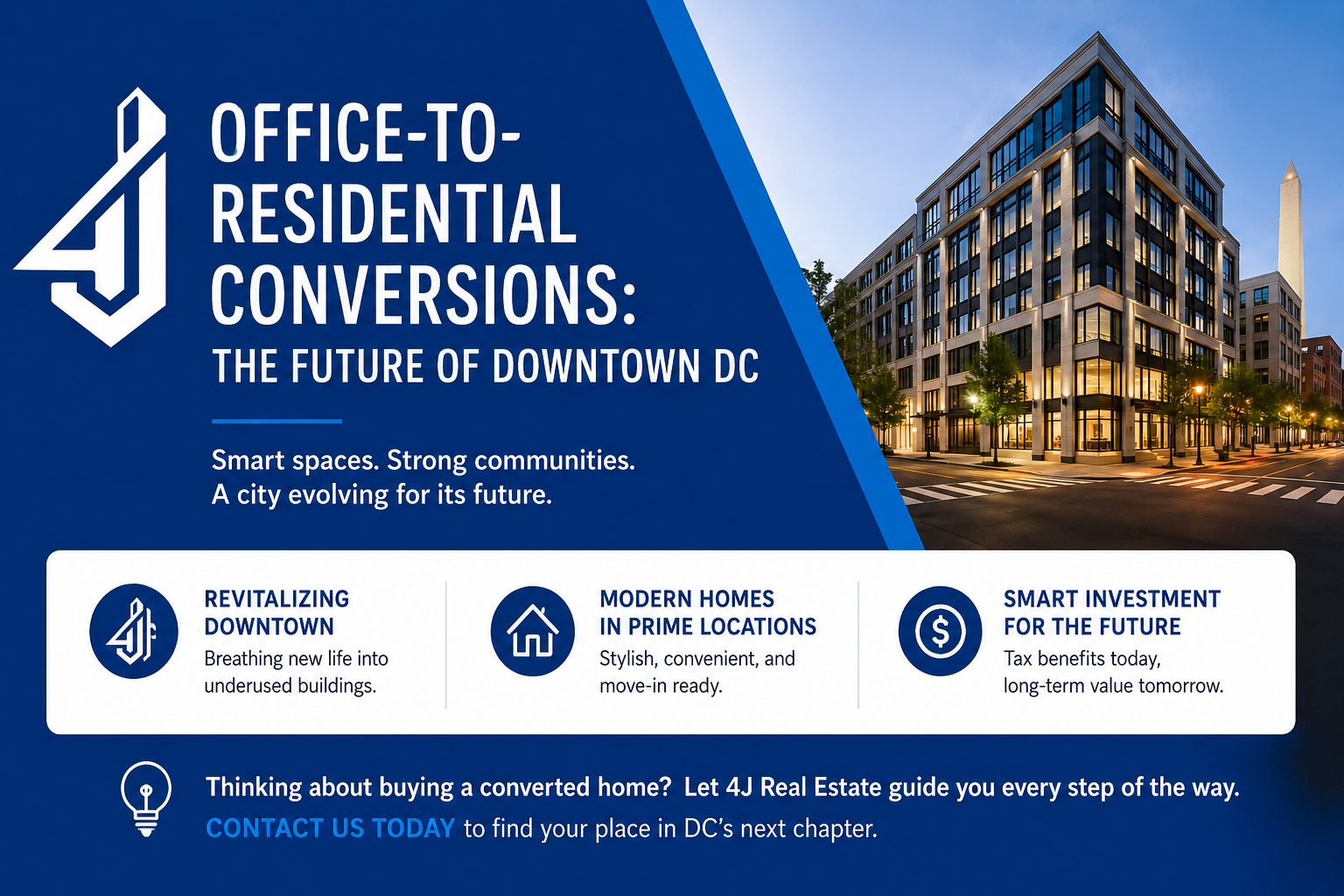
Office-to-Residential Conversions: The Future of Downtown DC
Washington, DC, is experiencing a major transformation in commercial real estate, and one of the biggest trends shaping the city is office-to-residential conversions. As remote and hybrid work continue to impact office demand, developers and city planners are reimagining underused office buildings into modern residential communities. For homebuyers, especially first-time buyers, this shift could create exciting opportunities to own property in some of DC’s most desirable neighborhoods.
From Downtown DC to areas like Penn Quarter and the Golden Triangle, former office towers are being redesigned into luxury condos, mixed-use communities, and modern apartments that appeal to professionals, investors, and buyers looking for urban convenience.
If you are considering buying property in Washington, DC, Maryland, or Northern Virginia, understanding office-to-residential conversions can help you identify emerging opportunities before prices climb even higher.
Why Office-to-Residential Conversions Are Growing in DC
Washington, DC, has long relied on government agencies, law firms, nonprofits, and corporate tenants to fill office buildings throughout the downtown corridor. However, changing workplace habits have left many older office buildings partially vacant.
Rather than allowing these properties to sit empty, developers are converting them into residential spaces designed for modern city living. This trend is helping revitalize downtown neighborhoods while creating more housing inventory in an area where supply has historically been limited.
The city government has also encouraged these projects through zoning adjustments, tax incentives, and redevelopment programs aimed at increasing housing availability and bringing more full-time residents into the downtown core.
For buyers, this means more opportunities to purchase newly renovated condos or residential units in locations that were previously dominated by commercial office space.
Why Buyers Are Interested in Converted Properties
Office-to-residential conversions often combine modern finishes with unique architectural details that are difficult to find in traditional residential developments.
Many of these buildings feature:
-
Large windows and open floor plans
-
Modern amenities like fitness centers and rooftop lounges
-
Walkability to restaurants, Metro stations, and entertainment
-
Energy-efficient upgrades
-
Prime downtown locations
Neighborhoods like Penn Quarter are especially attractive because buyers can enjoy easy access to museums, dining, nightlife, and major employers while still benefiting from the growing residential community.
For first-time buyers, these properties may offer a more affordable path into central Washington, DC, compared to some established luxury condo markets.
Understanding the Buying Process for Converted Properties
Buying a converted residential property is similar to purchasing a condo, but there are a few additional considerations buyers should understand.
Step 1: Research the Developer and Building History
Not all conversions are created equally. Buyers should research the developer’s track record and the history of the building itself. Older office buildings may require extensive upgrades to plumbing, electrical systems, HVAC, and soundproofing.
A strong developer with experience in adaptive reuse projects is often a good sign that the conversion was completed thoughtfully and with long-term quality in mind.
Step 2: Review Condo Documents Carefully
When purchasing a converted condo, buyers should carefully review:
-
HOA fees
-
Reserve studies
-
Building warranties
-
Planned future renovations
-
Rules and restrictions
Because these projects are relatively new, some buildings may still be establishing long-term maintenance plans.
Step 3: Secure Financing Early
Financing can occasionally be more complex for newly converted buildings, especially if the project is still under construction or if the condo association has not yet met lender requirements.
Working with a lender experienced in DC condo financing can help buyers avoid delays and better understand available loan programs.
Step 4: Schedule Thorough Inspections
Even though many converted units are newly renovated, inspections remain extremely important. Buyers should hire inspectors who understand both residential and commercial construction.
An inspection can uncover potential issues involving insulation, plumbing retrofits, ventilation systems, or window installations.
How Office Conversions Could Impact Property Values
Many real estate experts believe office-to-residential conversions could strengthen long-term property values in Downtown DC.
As more residents move into formerly commercial neighborhoods, local businesses, restaurants, grocery stores, and entertainment venues often follow. This increased activity can make neighborhoods more desirable and walkable, which historically supports property appreciation.
Additionally, the limited amount of developable land in Washington, DC, means adaptive reuse projects may become increasingly important for creating new housing inventory.
For buyers thinking long-term, entering the market early in transitioning neighborhoods could provide significant upside potential over time.
What Makes Downtown DC Attractive to Buyers
Downtown DC offers a lifestyle many buyers are actively seeking:
-
Walkability to Metro stations
-
Access to dining and nightlife
-
Proximity to major employers
-
Cultural attractions and museums
-
Reduced commuting times
As conversions continue, the downtown area is gradually shifting from a primarily daytime office district into a more vibrant mixed-use residential community.
This transformation is especially appealing to young professionals, government employees, and investors looking for centrally located properties.
3 Actionable Tips for Buyers Considering Converted Properties
1. Work With an Agent Familiar With Adaptive Reuse Projects
Office-to-residential conversions have unique considerations that differ from traditional condos. An experienced real estate professional can help you evaluate developer quality, financing options, and long-term investment potential.
2. Compare HOA Fees Against Amenities
Some converted buildings offer extensive luxury amenities, which can increase monthly condo fees. Make sure the amenities align with your lifestyle and budget before purchasing.
3. Focus on Transit and Walkability
Properties near Metro stations and entertainment districts often maintain stronger resale demand. Prioritize locations with excellent walkability and easy transportation access.
The Future of DC Real Estate
Office-to-residential conversions are likely to remain a major part of Washington, DC’s real estate future. As the city continues adapting to new workplace trends, buyers may see increased opportunities to purchase modern homes in highly desirable urban locations.
For first-time buyers, investors, and professionals looking for convenient city living, these developments may offer a rare combination of location, lifestyle, and long-term value.
As Downtown DC evolves into a more residential-focused environment, buyers who understand the market early may be well-positioned to benefit from the next chapter of the city’s growth.
Ready to Explore DC Real Estate Opportunities?
Whether you are considering a condo conversion in Downtown DC, an investment property, or your first home purchase, 4J Real Estate can help guide you through the process. Contact 4J Real Estate today to learn more about available properties throughout Washington, DC, Maryland, Northern Virginia, Delaware, Pennsylvania, and Florida.
Posted by Justin Paulhamus on
Enjoy this blog post? Click here to subscribe for updates
Leave A Comment