
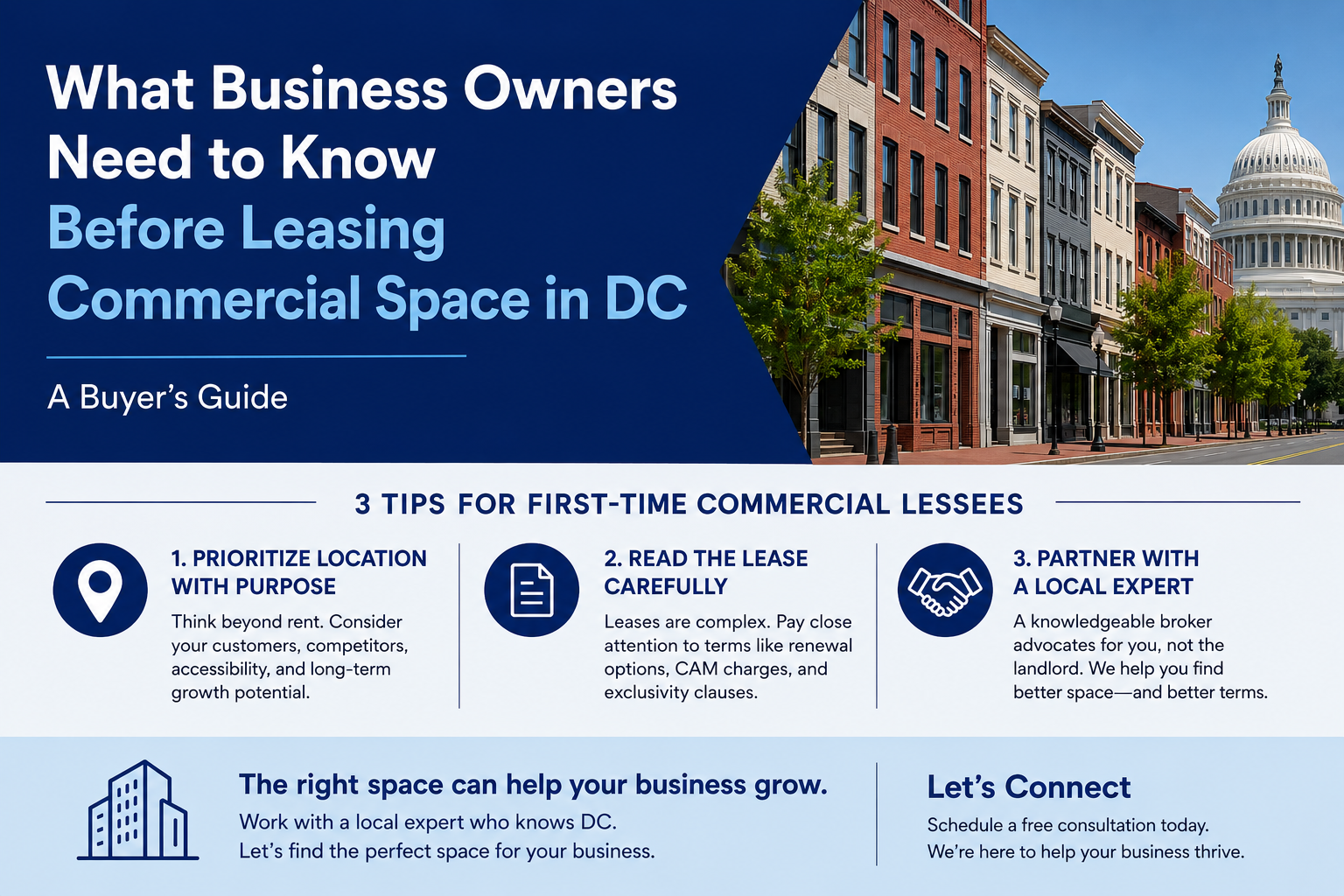
What Business Owners Need to Know Before Leasing Commercial Space in DC
Leasing commercial space in Washington, DC, can be an exciting milestone for business owners looking to grow their brand, increase visibility, or establish a stronger presence in one of the country’s most influential markets. Whether you’re opening a boutique retail shop, expanding your restaurant, launching a professional office, or moving your startup into a larger space, finding the right commercial property is about more than square footage.
For first-time business owners especially, the commercial leasing process can feel overwhelming. From understanding lease terms and zoning regulations to evaluating neighborhood traffic and hidden costs, there are several important factors to consider before signing an agreement.
If you’re considering leasing commercial real estate in Washington, DC, here’s what you need to know before making your move.
Why Washington, DC, Remains a Strong Market for Businesses
Washington, DC, continues to attract entrepreneurs, investors, and established companies because of its strong economy, high-income demographics, and steady consumer demand. Neighborhoods across the city offer unique opportunities depending on your industry and target audience.
One area many business owners continue to watch is Shaw. Known for its walkability, nightlife, restaurants, and growing residential population, Shaw has become a highly desirable destination for retail, hospitality, and office tenants. Businesses leasing in neighborhoods like Shaw often benefit from strong foot traffic and proximity to Metro access, making it easier for customers and employees to reach them.
However, commercial space in DC is competitive, and understanding the leasing process upfront can help you avoid costly mistakes.
Understand the Difference Between Leasing and Buying
Many first-time business owners confuse commercial leasing with purchasing property. Leasing means you are renting the space for a specific period while operating your business there. The property owner remains responsible for ownership, while the tenant agrees to follow the lease terms.
Commercial leases are generally more complex than residential leases. They often involve longer commitments, additional operating expenses, and negotiable terms related to renovations, maintenance, and rent increases.
For many business owners, leasing is a smart first step because it requires less upfront capital than purchasing commercial real estate outright. Leasing also provides flexibility if your business grows quickly or if market conditions change.
Know the Types of Commercial Leases
One of the most important parts of leasing commercial space is understanding the type of lease being offered.
Gross Lease
With a gross lease, the tenant typically pays one flat monthly rent amount while the landlord covers most property expenses like taxes, insurance, and maintenance.
Triple Net Lease (NNN)
A triple net lease is common in commercial real estate. In this arrangement, tenants pay base rent plus additional costs such as:
-
Property taxes
-
Insurance
-
Building maintenance
-
Common area expenses
While the base rent may appear lower, the extra costs can significantly increase your monthly expenses.
Modified Gross Lease
This type of lease falls somewhere in between. Some expenses are shared between the tenant and landlord.
Before signing any lease, it’s essential to fully understand what expenses you’ll be responsible for beyond the advertised rent.
Evaluate the Location Carefully
Location plays a major role in the success of any business. A space may look great online, but you also need to evaluate traffic patterns, parking availability, surrounding businesses, and customer accessibility.
Ask yourself:
-
Is the neighborhood growing?
-
Is there enough foot traffic for my business?
-
Are there nearby competitors?
-
Is the space accessible by Metro or major roads?
-
Does the area match my target customer demographic?
For example, a coffee shop or restaurant may thrive in a high-foot-traffic area like Shaw, while a law office or consulting firm may prioritize proximity to government buildings or downtown business districts.
Understand Zoning and Permits
One major mistake first-time business owners make is assuming any commercial space can be used for any business type.
In Washington, DC, zoning laws regulate how properties can be used. Before leasing a property, verify that the location is properly zoned for your business operations.
You may also need:
-
Business licenses
-
Occupancy permits
-
Health department approvals
-
Signage permits
-
Build-out approvals
Failing to verify zoning or permitting requirements can delay your opening and create unnecessary expenses.
Working with an experienced commercial real estate professional can help you identify potential issues before you sign a lease.
Negotiate More Than Just Rent
Many business owners don’t realize commercial lease terms are often negotiable.
In addition to rent, you may be able to negotiate:
-
Tenant improvement allowances
-
Free rent periods
-
Renewal options
-
Build-out responsibilities
-
Parking agreements
-
Rent escalation limits
For example, if the space requires renovations, the landlord may contribute toward construction costs or provide several months of reduced rent while the work is completed.
Negotiating favorable lease terms upfront can save your business thousands of dollars over time.
Budget for Hidden Costs
Monthly rent is only part of your total operating expenses.
Business owners should also account for:
-
Utilities
-
Internet and security systems
-
Property maintenance fees
-
Insurance
-
Taxes
-
Furniture and equipment
-
Renovations and signage
-
Employee parking
Creating a realistic budget before signing a lease helps prevent financial strain later.
3 Actionable Tips Before Leasing Commercial Space in DC
1. Work With a Commercial Real Estate Expert
Commercial leases are complex. Having an experienced real estate professional on your side can help you evaluate lease terms, compare locations, and negotiate favorable conditions.
2. Visit the Property at Different Times of Day
A neighborhood can feel very different during weekday mornings, evenings, and weekends. Visit multiple times to evaluate traffic, parking, safety, and customer activity.
3. Review the Lease With an Attorney
Never sign a commercial lease without legal review. An attorney can identify clauses that may create financial risk or operational limitations for your business.
Final Thoughts
Leasing commercial space in Washington, DC, is a major business decision that requires careful planning, research, and negotiation. The right location can help your business attract customers, build visibility, and grow successfully, while the wrong lease can create long-term financial challenges.
From understanding lease structures and zoning regulations to evaluating neighborhoods like Shaw and negotiating tenant improvements, preparation is key.
If you’re planning to lease commercial space in Washington, DC, Maryland, or Northern Virginia, working with a knowledgeable commercial real estate professional can make the process far more manageable.
Ready to Find the Right Commercial Space?
4J Real Estate helps business owners navigate the commercial leasing process with confidence. Whether you’re opening your first location or expanding your business footprint, our team can help you identify the right opportunities throughout Washington, DC, Maryland, Northern Virginia, Delaware, Pennsylvania, and Florida.
Posted by Justin Paulhamus on
Enjoy this blog post? Click here to subscribe for updates
Leave A Comment