
What Buyers Should Know About Closing Costs in DC, MD, and VA
Buying a home in the Washington DC region involves more than saving for a down payment. Many first-time buyers are surprised to learn that they also need to budget for closing costs—the fees and expenses required to finalize a real estate transaction.
Whether you're purchasing a condo in Capitol Hill, a townhouse in Northern Virginia, or a single-family home in Maryland, understanding closing costs ahead of time can help you avoid surprises and plan your budget confidently.
In this guide, we'll break down what closing costs are, how much buyers typically pay in Washington DC, Maryland, and Northern Virginia, and what first-time buyers should expect during the process.
What Are Closing Costs?
Closing costs are the collection of fees and prepaid expenses buyers pay at the end of the home purchase process. These costs cover services required to transfer ownership of the property and finalize the mortgage.
Closing costs typically include:
-
Loan origination fees from the lender
-
Appraisal fees
-
Title search and title insurance
-
Settlement or attorney fees
-
Home inspection costs
-
Recording fees charged by the local government
-
Prepaid property taxes and homeowner’s insurance
-
Transfer and recordation taxes
These costs are paid at closing, which is the final step when the property officially transfers from the seller to the buyer.
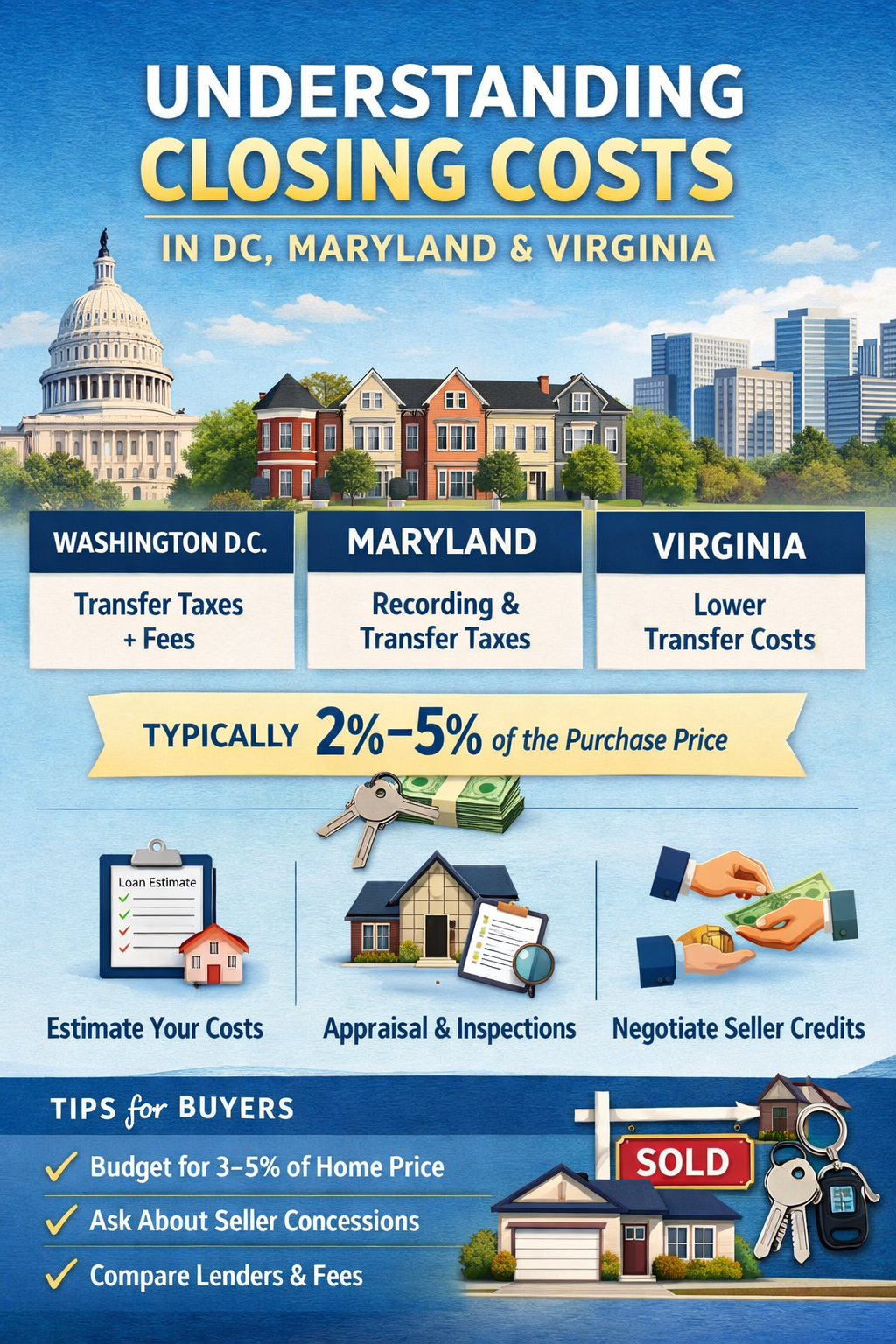
For most buyers in the DC metro area, closing costs typically range from 2% to 5% of the purchase price.
For example, if you buy a $500,000 home, you may pay $10,000–$25,000 in closing costs depending on the location, lender, and loan program.
How Closing Costs Differ in DC, Maryland, and Virginia
One reason buyers in the DC metro area should plan carefully is that closing costs vary depending on where the property is located.
Washington DC
Washington DC has transfer and recordation taxes, which are often split between buyers and sellers, though negotiations can vary.
Buyers in DC may see slightly higher closing costs due to:
-
Recordation tax
-
Transfer tax
-
Condo or HOA documentation fees
For example, a first-time buyer purchasing a condo in Capitol Hill may also pay condo-related fees such as document review charges and move-in deposits.
Maryland
Maryland has a transfer tax and recordation tax, but these costs are often split between buyer and seller depending on the contract terms.
Maryland buyers also pay for:
-
Title services
-
State and county recording fees
-
Lender and settlement fees
One thing many Maryland buyers appreciate is that some counties offer first-time buyer transfer tax discounts, which can reduce overall costs.
Northern Virginia
Virginia tends to have lower transfer and recordation taxes compared with DC and Maryland.
However, buyers in Northern Virginia still pay:
-
Lender fees
-
Title insurance
-
Recording fees
-
HOA or condo documentation fees
Because of these lower taxes, some buyers find overall closing costs slightly lower in Virginia, though the exact numbers depend on the property and loan structure.
The Closing Cost Timeline for First-Time Buyers
Many first-time buyers don’t realize that closing costs become clearer as the transaction moves forward.
Here’s how the process usually works:
1. Loan Estimate (Early Stage)
After applying for a mortgage, your lender provides a Loan Estimate within three business days. This document outlines estimated closing costs.
2. Inspections and Appraisal
During the contract period, you’ll typically pay for the home inspection and the lender orders an appraisal.
3. Final Closing Disclosure
About three days before closing, you receive a Closing Disclosure. This document lists the final numbers you’ll pay at settlement.
4. Closing Day
On closing day, you’ll bring a wire transfer or certified funds to cover your down payment and closing costs.
Your real estate agent and settlement company coordinate this process to ensure everything is completed smoothly.
Three Smart Tips to Prepare for Closing Costs
1. Budget Early for 3–5% of the Purchase Price
A good rule of thumb is to plan for 3–5% of the home price in closing costs. This helps ensure you have enough cash available when closing day arrives.
For example:
-
$400,000 home → $12,000–$20,000 closing costs
-
$600,000 home → $18,000–$30,000 closing costs
Planning ahead can prevent last-minute financial stress.
2. Ask About Seller Credits
In some markets, buyers can negotiate seller concessions, also known as seller credits.
This means the seller agrees to pay part of the buyer’s closing costs as part of the deal. While it depends on market conditions, seller credits can significantly reduce your upfront expenses.
An experienced real estate agent can help structure this during negotiations.
3. Shop Around for Lenders and Title Companies
Many buyers assume closing costs are fixed, but some fees vary between lenders and settlement companies.
Shopping for quotes can help you compare:
-
Loan origination fees
-
Discount points
-
Title insurance costs
-
Settlement service fees
Even a small difference in fees can save thousands of dollars.
Why Understanding Closing Costs Matters
Closing costs are a key part of the home buying process, especially in a competitive and high-value market like Washington DC and the surrounding suburbs.
By understanding these expenses early, buyers can:
-
Avoid surprises during closing
-
Plan their savings more accurately
-
Negotiate smarter during the contract process
-
Move into their new home with confidence
The good news is that with the right preparation and guidance, closing costs become a manageable and predictable part of buying a home.
Ready to Buy in DC, Maryland, or Northern Virginia?
If you’re thinking about buying a home in the DC area and want help understanding closing costs, financing options, and the home buying process, the team at 4J Real Estate is here to help.
Our experienced agents guide buyers through every step—from pre-approval to closing—so you know exactly what to expect.
Contact 4J Real Estate today to start your home search with confidence.
Enjoy this blog post? Click here to subscribe for updates
Leave A Comment